
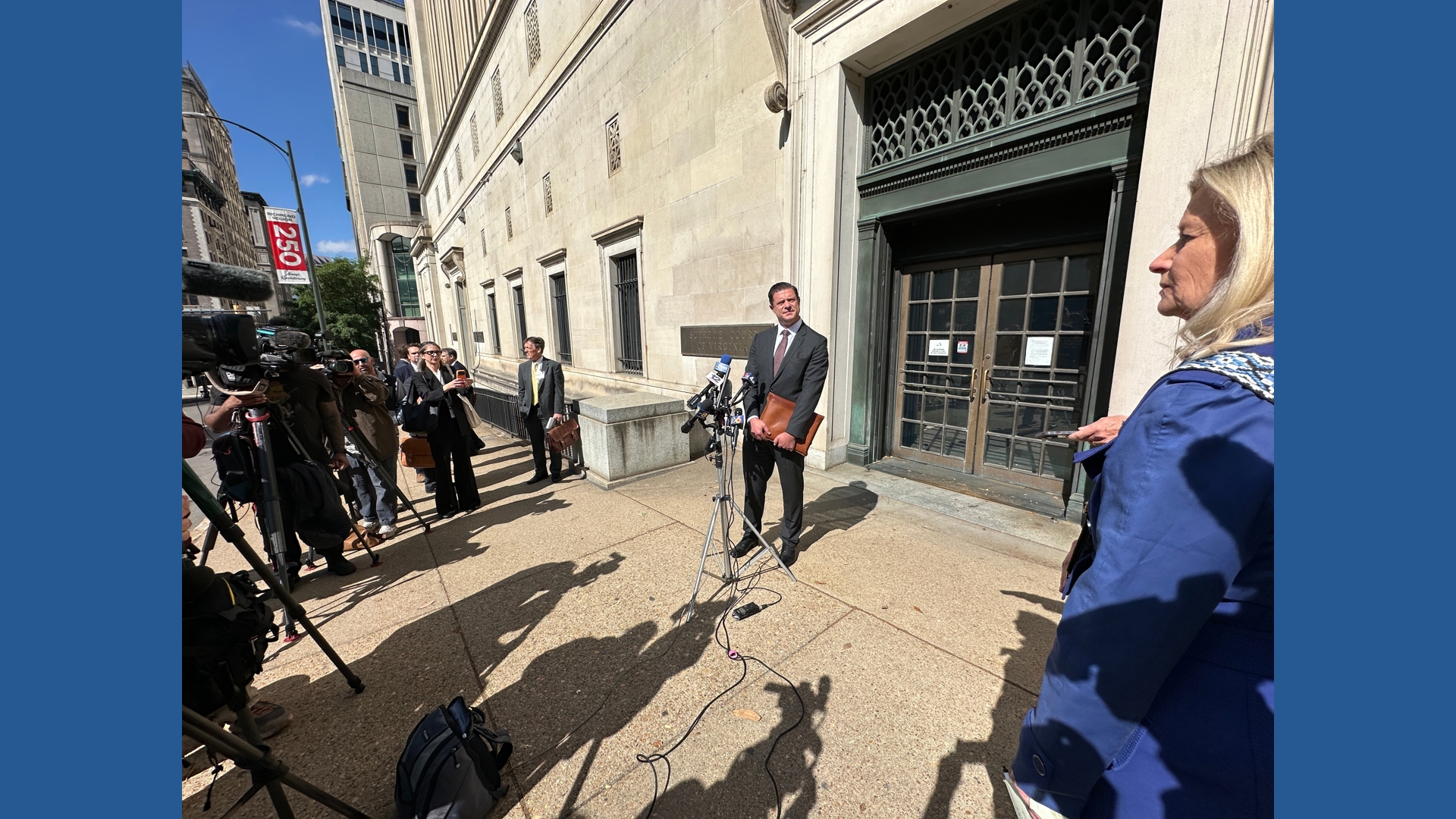
When a voter-approved congressional map lands in the highest court of a pivotal swing state, the implications stretch far beyond state lines. In Virginia, the Supreme Court is now at the center of a constitutional and political storm as it weighs whether to block a new US House map drawn to favor Democrats—despite being ratified by voters through a ballot initiative. The decision could redefine how power flows in Virginia’s delegation and set a precedent for how courts handle voter-backed redistricting reforms that clash with legal or procedural standards.
This isn’t just about partisan advantage. At its core, the case challenges the balance between direct democracy and judicial oversight—a tension that’s only grown sharper as states grapple with fairness, representation, and the legacy of gerrymandering.
A Voter Mandate Faces Judicial Review
In a 2020 ballot referendum, Virginia voters approved a constitutional amendment creating an independent redistricting commission. The goal? To end partisan gerrymandering by removing map-drawing power from the legislature. But what was intended as a fix has become a flashpoint.
The Virginia Redistricting Commission—a 16-member panel split between lawmakers and citizens—failed to agree on maps by the 2021 deadline. Under the amendment, responsibility then fell to the Virginia Supreme Court, which appointed special masters to draw the congressional and legislative lines. Those maps, finalized in 2022, were used in the 2022 and 2024 elections.
Now, the court is being asked to revisit its own role.
Republican lawmakers and conservative voters have filed a lawsuit claiming the map violates the state constitution’s requirement for “equal population” and “contiguous districts,” and further arguing that the court-appointed mapmakers overstepped by creating districts that systematically benefit Democrats. They point to districts like the 2nd and 7th, where Democratic candidates won by wide margins under the current lines, despite Virginia’s electorate being closely divided.
But here’s the irony: the very mechanism voters created to depoliticize redistricting is now being challenged for producing a politically skewed outcome.
Why the Court’s Decision Matters Beyond Virginia
Virginia’s congressional delegation currently holds a 6–5 Democratic majority in the US House. That ratio reflects a state where presidential results have been split: Biden won by 10 points in 2020, but Governor Glenn Youngkin, a Republican, won by 1 point in 2021.
If the Supreme Court overturns the current map, it could trigger a special redistricting process—potentially reshaping which party controls key swing districts in future elections. But more importantly, the ruling will signal whether voter-approved structural reforms can be undone when their outcomes appear to contradict constitutional principles.
Legal scholars note a deeper precedent at stake. “This case tests the limits of judicial deference to democratic processes,” says Dr. Lena Caldwell, a constitutional law professor at the University of Richmond. “Can a court invalidate a map it helped create, based on claims that it undermines fairness—even if that map emerged from a voter-backed reform?”
The concern isn’t hypothetical. If courts begin second-guessing maps born from failed bipartisan commissions, it could discourage similar reforms in other states like Michigan, Ohio, and Colorado—where independent commissions also face political headwinds.
The Mechanics of the Current Map
The congressional map in question divides Virginia into 11 districts. Under this map:
- Five districts are solidly Democratic (3rd, 4th, 5th, 8th, and 11th)
- Five are competitive or lean Republican (1st, 6th, 7th, 9th, 10th)
- Only the 2nd and 7th are considered true swing districts
But analysis from the Virginia Public Access Project shows that the Democratic-favoring tilt becomes evident in “wasted vote” distribution. In the 2024 elections, Democrats won 55% of the statewide congressional vote but captured 54.5% of the seats—close to proportional, but with structural advantages in urban clusters like Northern Virginia and Richmond.
Critics argue that the map packs Republican voters into large, rural districts (like the 9th, which spans much of Southwest Virginia), while cracking conservative suburbs in places like Chesapeake and Virginia Beach between multiple Democratic-leaning districts.
For example: - The 2nd District stretches from Norfolk to the Outer Banks, combining coastal military communities with resort towns 100 miles apart. - The 7th District snakes from suburban Richmond westward into rural Louisa County, merging neighborhoods with vastly different economic and cultural profiles.
These configurations raise legitimate questions about contiguity and community integrity—two criteria explicitly listed in the state constitution.
Past Precedents and Legal Pitfalls
Virginia’s legal landscape on redistricting is complex. In 2019, the US Supreme Court ruled in Rucho v. Common Cause that federal courts cannot intervene in partisan gerrymandering cases, declaring them “political questions” beyond judicial reach. That decision shifted the battleground to state courts, where constitutions often include stronger language on fairness and representation.
And Virginia’s constitution does include specific guardrails: - Districts must be “composed of contiguous and compact territory” - They must respect “natural and artificial barriers” - And must “preserve communities of interest”
The plaintiffs in the current case argue that the special masters’ map violates all three. They cite geographic oddities, such as District 2’s separation by the Chesapeake Bay, which requires travel by bridge or tunnel—hardly “contiguous” in practical terms.
But defenders of the map counter that strict geographic contiguity can’t override population equality, especially in a state with uneven growth. Northern Virginia alone accounts for nearly one-third of the state’s population, making it impossible to draw equal districts without some creative shaping.
Moreover, the court-appointed special masters followed a transparent process, holding public hearings and publishing multiple draft iterations. They prioritized keeping counties and cities whole where possible and avoiding splitting jurisdictions.
“There’s a difference between a district that looks odd on a map and one that’s legally invalid,” says redistricting expert Marcus Hale. “Courts have historically given mapmakers wide latitude, as long as the lines don’t intentionally dilute voting power.”
The Risk of Judicial Overreach
One of the most delicate aspects of this case is that the Virginia Supreme Court would be invalidating a map it effectively created. That self-review creates a perception problem: Can the court be impartial when judging its own appointees’ work?
Legal ethicists warn that overturning the map now could undermine public trust in judicial neutrality. “If the court blocks this map after allowing it to be used in two federal elections, it risks appearing politically motivated—especially given the current conservative majority on the bench,” says Hale.
That concern is amplified by timing. The lawsuit was filed after Republicans made unexpected gains in the 2023 state elections, regaining control of the General Assembly. With new legislative majorities comes new incentive to reshape the congressional landscape.
Democrats counter that blocking the map now would disenfranchise hundreds of thousands of voters who cast ballots under the accepted boundaries. “You can’t redraw the rules mid-game,” said State Senator Ghazala Hashmi. “Voters participated in elections based on this map. Undoing it now creates chaos.”
What a Ruling Could Look Like
The court has several paths forward:
- Uphold the map – The court could rule that, while imperfect, the map meets constitutional standards and that judicial second-guessing after two election cycles would cause more harm than good.
- Order a new process – The court might find flaws in the current map but stop short of imposing a new one, instead directing the legislature and commission to restart negotiations under tighter deadlines.

- Appoint new special masters – The justices could invalidate the current map and appoint a new panel to draw revised lines, potentially with stricter guardrails on compactness and community preservation.
- Remand to lower courts – The court could send the case back to circuit court for further fact-finding, delaying any decision until after the next election.
Each option carries consequences. Upholding the map maintains stability but may let constitutional concerns go unaddressed. Ordering a redo risks election chaos and could prompt appeals to the US Supreme Court on due process grounds.
Broader Implications for Redistricting Reform
Virginia’s struggle reflects a national dilemma: how to balance fairness, legality, and public will in redistricting.
States with independent commissions—like Michigan and Arizona—have also seen legal challenges when maps favored one party. But few have reached the point where the judiciary must review its own handiwork.
The outcome in Virginia could influence whether other states: - Strengthen commission powers to avoid court intervention - Add stricter geographic requirements to their constitutions - Or abandon reform efforts altogether, fearing judicial unpredictability
“What happens in Virginia won’t stay in Virginia,” says political analyst Debra Nguyen. “If voter-backed reforms can be overturned by courts on technical grounds, it sends a chilling message to reformers nationwide.”
A Path Forward: Clarity Over Politics
The Virginia Supreme Court does not need to choose between democracy and legality. It can affirm the people’s role in redistricting reform while enforcing clear, objective standards.
To avoid future crises, lawmakers and advocates should consider: - Revising the redistricting amendment to define “contiguous” and “community of interest” more precisely - Requiring supermajority approval in the commission before defaulting to court appointment - Establishing nonpartisan criteria rankings (e.g., population equality first, compactness second, partisan fairness third)
Transparency matters. The current process was open, but too few voters understood how the map was made. Future commissions should be required to publish plain-language justifications for every district line.
And above all, courts must resist the temptation to act as political arbiters. Their role is to uphold the constitution—not to balance partisan outcomes.
The Virginia Supreme Court’s decision will soon reveal whether it sees itself as a guardian of process or a referee of results. The integrity of redistricting reform may depend on that distinction.
Frequently Asked Questions
Why is the Virginia Supreme Court involved in drawing election maps? Because the state’s redistricting commission failed to agree on maps by the deadline, the state constitution transferred authority to the Supreme Court to appoint special masters to create them.
Does the current map favor Democrats? Analyses show the map gives Democrats a structural advantage in several districts, though Virginia’s statewide vote is closely divided. The 6–5 Democratic delegation doesn’t necessarily overrepresent Democratic voters proportionally.
Can courts block a voter-approved redistricting process? Yes, if the outcome violates constitutional requirements like equal population, contiguity, or communities of interest—even if the system itself was approved by voters.
What happens if the court blocks the map? The court could order new maps to be drawn, either by a new panel of special masters or by requiring the commission to restart negotiations, potentially affecting future elections.
How does this affect upcoming elections? If the map is overturned and new lines are drawn before 2026, candidates would run under new districts. Delayed rulings might preserve the current map for another cycle.
Has Virginia had gerrymandering issues before? Yes. Prior to 2020, Virginia’s legislature drew maps openly favoring the majority party. Multiple maps were struck down in federal court for racial gerrymandering.
What can voters do to influence redistricting? Voters can participate in public hearings, submit their own map proposals, advocate for clearer constitutional standards, and support transparency in the commission process.
FAQ
What should you look for in Virginia Supreme Court Weighs Fate of Democrat-Friendly House Map? Focus on relevance, practical value, and how well the solution matches real user intent.
Is Virginia Supreme Court Weighs Fate of Democrat-Friendly House Map suitable for beginners? That depends on the workflow, but a clear step-by-step approach usually makes it easier to start.
How do you compare options around Virginia Supreme Court Weighs Fate of Democrat-Friendly House Map? Compare features, trust signals, limitations, pricing, and ease of implementation.
What mistakes should you avoid? Avoid generic choices, weak validation, and decisions based only on marketing claims.
What is the next best step? Shortlist the most relevant options, validate them quickly, and refine from real-world results.